
VCDX No Troubleshooting Scenario
I just read the update from the VCDX program that they’re removing the troubleshooting scenario from all defenses. While I was looking forward to trying to do some on the spot troubleshooting, I’m glad that there is more time now dedicated to the design scenario.
I’m planning on targeting 2016 to give the VCDX-DCV certification a try and not having to work through an already stressful situation by working through a troubleshooting problem is going to alleviate some of that stress. Granted the troubleshooting scenario is only 15 minutes in length, now that time is added to the design scenario problem posed by the panelists.

So the breakdown now will be for all tracks:
- Orally defend the submitted design (75 minutes)
- Work through a design problem posed by the panelists, in the format of an oral discussion (45 minutes instead of the previous 30 mins)
Not that this makes the certification easier to achieve by any means. I’m glad that the VCDX program has made this information available well ahead of the 2016 dates so that those that are preparing now can adjust their studying strategies.
I’m looking forward to the challenging and learning experience that will come.
Resources:
- 2016 VCDX Defense Improvements: https://blogs.vmware.com/education/2015/11/2016-vcdx-defense-improvements.html
AWS Regions and Availability Zones
Every IT architect strives to deliver an optimized and cost effective solution to their customer. Therefore, they must be able to explain and understand the different options that a customer has to then assist them in choosing the best option possible taking the trade-offs into account. There is a mutual partnership relationship between the architect and the customer that is ongoing in order to produce a quality output deliverable.
Amazon AWS infrastructure is broken up by regions and availability zones. They continue to expand their infrastructure constantly as their business grows. So what is a region, a region is a named set of AWS resources in the same separate geographic area. AWS provides you with a choice of different regions around the world in order to help customers meet their requirements. Each region is completely isolated from the other regions.
There are only a set number of available regions to choose from when but as the customers grow, then AWS will continue to provide the infrastructure that meets the global requirements. In North America AWS has 3 regions to choose from and a GovCloud region:
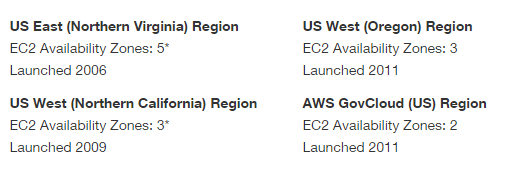
Inside of these regions, there are Availability Zones. These are basically AWS data centers within these regions that are connected to each AZ in the region via low latency links.
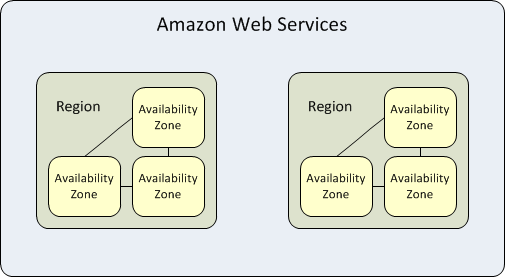
Availability zones allows you to architect your applications to be as resilient as possible by separating them out as failure domains so that there is not a single point of failure. As with all architects, we must design architectures that assumes that things will fail.
With the implementation of Auto-Scaling, ELBs and multiple Availability Zones then you can build a reliable architecture that takes only minutes to setup instead of days and weeks. I’ll go over Auto-Scaling and ELBs on a separate post.
Resources:
- Regions and Availability Zones: http://docs.aws.amazon.com/AWSEC2/latest/UserGuide/using-regions-availability-zones.html
- AWS Global Infrastructure: http://aws.amazon.com/about-aws/global-infrastructure/
AWS Certified Solutions Architect – Associate Level
I saw this challenge from Virtualization Design Masters (VDM) to write 30 blog postings in 30 days. I’m going into this with the intention of being able to do this since I’ve been meaning to post more blog postings and it might even get me into the habit of posting regularly. I don’t want to post for the sake of posting since I feel like that adds no value so I have my list of topics that I’m currently working on right now so I feel prepared.
So I decided to tackle the Amazon certification for AWS Certified Solutions Architect – Associate Level. I’m planning on taking it at the end of the month, hopefully if everything works out. I’ve been meaning to learn more about AWS for a long time now, but I think now is the time, especially since it’s only going to get more popular.
The exam is a multiple choice exam covering four different domains:
| Domain | % of Examination |
| 1.0 Designing highly available, cost efficient, fault tolerant, scalable systems | 60% |
| 2.0 Implementation/Deployment | 10% |
| 3.0 Data Security | 20% |
| 4.0 Troubleshooting | 10% |
| TOTAL | 100% |
So obviously the first domain is the biggest bang for your buck when it comes to scheduling your studying time. This section also fits very nicely with my other work responsibilities and other certifications that I have my eye on, namely the illusive VCDX. I’ve started by signing up for the free 12 month AWS account to use as my lab so that I can try different things that I haven’t done so far like Amazon Aurora which is a relational database engine.
I’ve started by reviewing the exam blueprint and getting familiar with it. Amazon does a good job on documentation so their user guides are very useful and easy to understand. They really make it easy to consume their services and also offer self-paced labs via qwiklabs.com to help with your studying. I’ve only done the free labs there and they were good to get your feet wet.
Inside of my free AWS account I’ve been playing a lot with setting up Virtual Private Clouds (VPC) and the different layers of security that you can apply. A good image from the AWS user guide is the security in your VPC:
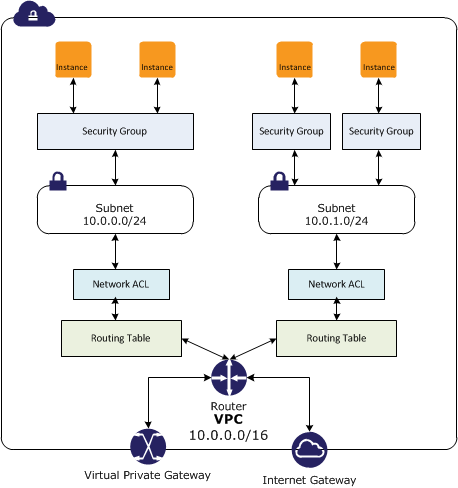
I really like easy to understand things that are broken down with good explanations, did I already say that AWS user guides are well written. 🙂
Below are my resources that I’m currently using for my studying.
Resources:
- AWS Certified Solutions Architect Blueprint: https://aws.amazon.com/certification/certified-solutions-architect-associate/
- Amazon VPC Concepts: http://docs.aws.amazon.com/AmazonVPC/latest/UserGuide/VPC_Introduction.html
- AWS re:Invent videos: https://www.youtube.com/watch?v=SG1DsYgeGEk
CCDA Study: What is PPDIOO?
Studying for CCDA: What is PPDIOO?
I’ve been studying for the Cisco Certified Design Associate (CCDA) to give me a better insight and view of the Cisco design methodology. I’m trying to be well rounded overall and this is one of weaker areas. It’s been interesting and I’m learning a lot in the way of how Cisco sees the building blocks for a network design.
I came across the acronym PPDIOO which stands for Prepare, Plan, Design, Implement, Operate, and Optimize.
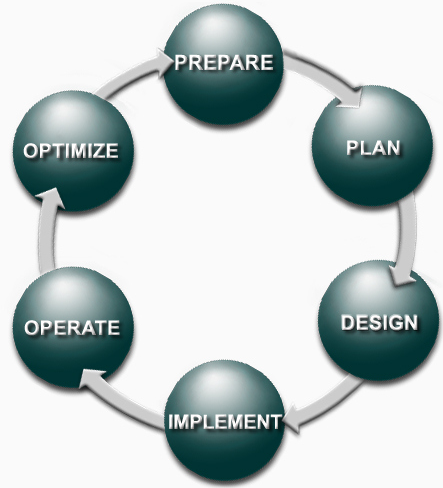
This is the network lifecyle. Each phase builds up to the next phase and provides a roadmap of how a network should be implemented, designed and upgraded.
| PPDIOO Phase | Description |
| Prepare | Establishes organizational and business requirements, develops a network strategy, and proposes a high-level architecture |
| Plan | Identifies the network requirements by characterizing and assessing the network, performing a gap analysis |
| Design | Provides high availability, reliability, security, scalability, and performance |
| Implement | Installation and configuration of new equipment |
| Operate | Day-to-day network operations |
| Optimize | Proactive network management; modifications to the design |
These different phases sound very familiar and match up to other design frameworks, ontologies or methodologies. But they all have a central focus on logically breaking down each step to provide a repeatable process in which all points are thought out.
 Digital4n6.me